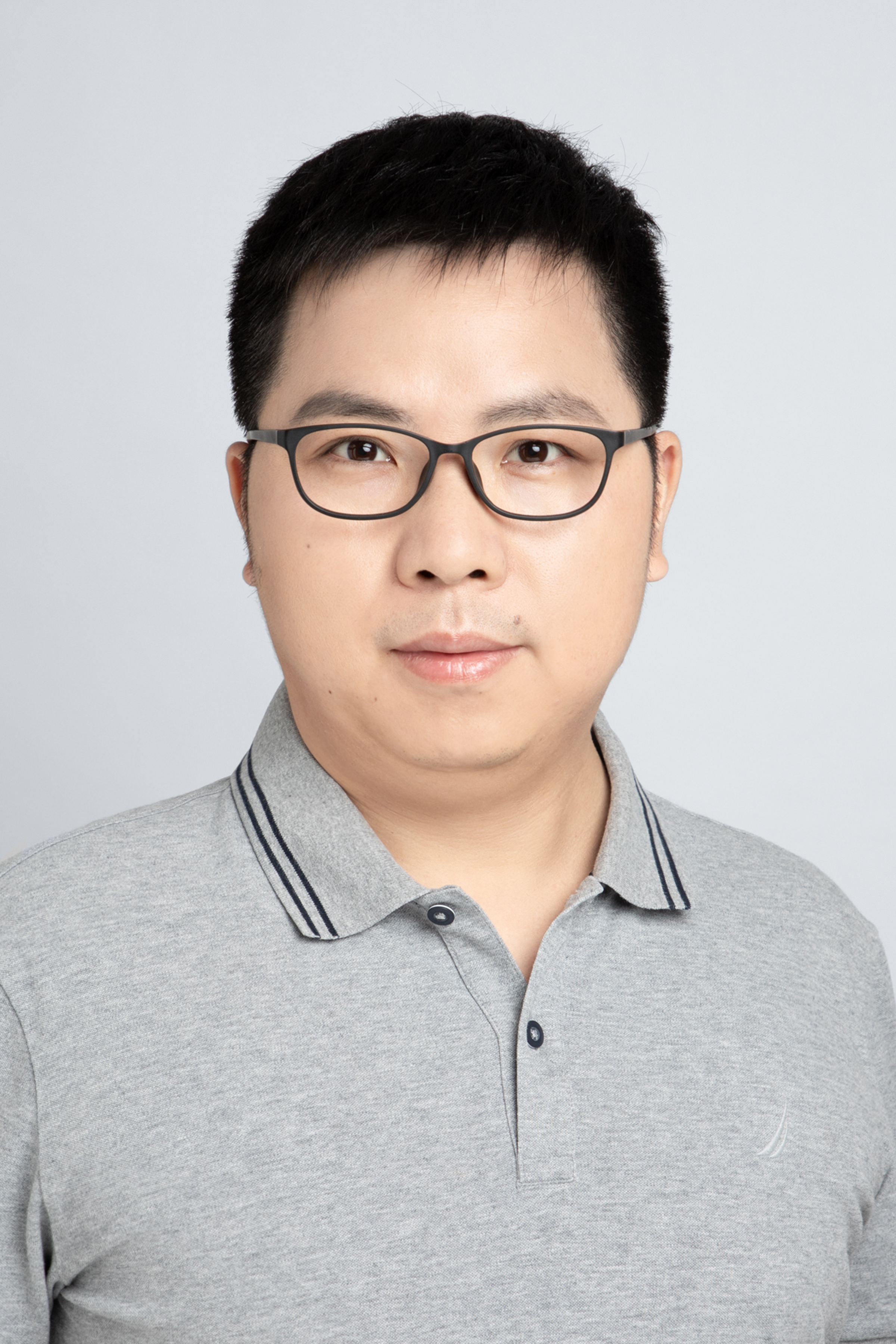
Jay Zeng
From clinical imaging at AGFA Healthcare and retail banking at Standard Chartered China to VP at crypto.com — hands-on throughout: coding, code review, system design and architecture review; strong opinions on clean code, TDD, spec-driven development; long-time Agile practitioner, from Scrum to pods. My teams — 30 engineers and QAs across six locations — built: a real-time US-equity market-data platform; a token-price platform and a digital-asset staking platform; a tokenized-securities (RWA) business through regulatory review to production; and applied-AI platforms on the group's internal AI gateway. I drove AI-assisted development to org-wide adoption with engineering guardrails.
Experience

- Led 30 engineers and QAs in AI-platform, RWA & digital-asset staking, market-data, NFT, and finance-transformation automation teams across six locations (Taiwan, Shenzhen, Shanghai, Singapore, Hong Kong, London) — owning system design, architecture reviews, and code review across the portfolio, alongside headcount planning, performance management & calibration, pay/reward, and budgets
- Established the tokenized-securities (RWA) business 0-to-1 — on-chain tokenization in Go for 1,500+ US equities serving the App's 100M+ registered users, owning the full lifecycle from architecture through regulatory review to production
- Drove AI-assisted software development to 100% adoption across the engineering organization — 12+ months of tooling rollout (Claude Code, Cursor, Augment) within the group's org-wide AI-SDLC (AIDLC) transformation — setting the engineering guardrails for model evaluation, cost governance, and code ownership
- Led the team that built AI-powered applications on the group's internal AI gateway — including Augur, an LLM + RAG market-intelligence platform co-created with the crypto.com Capital team, serving investment research, CRM client engagement, and the US-equity RWA business
- Managed market-data vendor relationships (ICE, CoinGecko, CoinMarketCap)
- Staking API Gateway — a lightweight intake layer: request validation and persistence, nothing else (native JAAS authentication, Redis auth cache, PostgreSQL)
- Staking Core Service — a self-designed Actor model: each shard — one instrument × one user-entity group (US / Canada / ROW / Card / IRA) — runs a single-threaded task loop fed by schedulers; for any instrument exactly one task is ever in flight — no locking, no concurrent-write races, data flow safe by construction
- Ingestion — private lines into ICE's CDP; a dedicated big-memory edge node runs the low-level socket protocol over licensed Tape A/B/C and NASDAQ feeds — peak ingress 1.4M+ msgs/sec
- Streaming backbone — raw ticks into Kafka topics partitioned by instrument and source; a ClickHouse consumer archives every raw message for long-term query
- Real-time processing — source-grouped in-memory workers on dual schedulers: a 5-second scheduler flushing worker cache to Redis and publishing enriched updates to per-source topics, a 1-minute scheduler re-publishing Redis state so clients never see a stale price
- Metadata & history — PostgreSQL holds instrument metadata, refreshed hourly via commands back to the CDP; a companion Go service computes multi-interval candlesticks from ICE's historical endpoints
- Asset universe — asset lists combined from ICE and Apex (the US equity broker), managing each stock's price reporting and tradable status
- Price engine — aggregated multi-source CEX and DEX tickers into real-time volume-weighted average prices (VWAP) for 2,000+ tokens: pairs standardized via base-currency routing, stale quotes dropped by liveness checks, spikes filtered with MAD and dynamic fallback thresholds, gated by listing breadth (7+ exchanges for the full outlier-filtered method, a dedicated thin-source path below)
- Price provider & price writer — the distribution path: the price provider consolidated sources by defined rules and published price reports to RabbitMQ routing keys; the price writer joined them with token metadata, persisted to a MongoDB replica set, and exposed REST and WebSocket read APIs to client services
- Metadata service — owned the canonical token identity across a universe of 20,000+ tokens: a single unique ID each, mapped to CoinGecko and CoinMarketCap IDs so vendor price feeds matched the right instrument. Maintained symbol, name, on-chain decimals, logo, and EEA compliance attributes — including the MiCA-required legal documents surfaced on the market website's token pages. Its ticker mappings drove the price engine's source selection and every serving-layer service attached its metadata
- an 8-layer concentration firewall
- scenario-and-rubric eval harnesses with nightly LLM evaluation
- degradation that never defaults to approval
- human-in-the-loop gates replaying immutable route bundles
- KMS signing isolated behind a dedicated executor service

- Led delivery of RB CDD Review — Standard Chartered China's first containerized application, digitizing retail-banking compliance (KYC/CDD review) workflows — in partnership with the China country technology management team and the CDD team
- Owned SCB China's retail-banking delivery portfolio — Java / Spring Boot microservices delivery with teams across Shanghai and Tianjin (BAU, mandatory & regulatory change, new initiatives, platform integration)
- Initiated the Shanghai API Banking engineering team build-out — stood up hiring and knowledge transfer from the Singapore core team
- Led partnership and vendor evaluation with Alipay, Ctrip Finance, and JD Finance — scoped product-listing feasibility and integration architecture for SCB retail products on third-party platforms (paused due to regulatory change)

- Led one of four scrum teams at AGFA's Shanghai R&D site, and served as site technical manager — the technical bridge to global R&D hubs in Waterloo, Ghent, and Vienna, jointly driving the evolution of the Enterprise Imaging Platform
- Led the team that delivered the platform's rule engine (Drools) and enterprise image-transfer capabilities — powering rule-directed clinical workflows, image routing and prefetching, report distribution, and storage-lifecycle management
- Full-stack engineering leadership for the Enterprise Imaging Platform — large-scale Java-based medical imaging with distributed hub-proxy architecture and high-availability deployment; domain depth across DICOM, HL7, IHE, FHIR
- Drove DevOps adoption across the Shanghai site — established CI/CD pipelines, regression testing workflows, and release management practices
What I build
Autonomous DeFi Fund Manager
Autonomous portfolio management system that discovers opportunities, allocates capital via MVO, and executes trades on-chain. A 15-step LangGraph agent pipeline orchestrates pool discovery, AI-driven debate (Bull/Bear/Judge LLMs), MVO with 6 constraint layers, pre-flight simulation, 8-layer concentration firewall, and GCP KMS signing — with human-in-the-loop approval for large trades. 21 protocol adapters across EVM and Solana. Python backend with Next.js dashboard. Deployed on GCP with Docker Compose — now testing with real funds. Authored a 10-part tutorial series on the mathematical foundations.
AI-Powered DeFi Analytics
Live DeFi yield intelligence platform at obolai.hk. Users ask questions; the platform classifies intent (rule-based), scores pools (6-factor risk model, backtest-validated against 58 exploits), and returns analysis with code-anchored bull/bear debate. 3-tier pricing (Free/$0.25/$0.50), daily Twitter digest, wallet-aware recommendations. A separate Python quant engine runs an internal capital strategy with backtested results: Sharpe 13.64, +10% alpha over 66 days. 51K lines TypeScript + ~2K lines Python. 58 test files. Live at obolai.hk.
Articles & research
The Three Pillars of AI Transformation
AI transformation is more than tool adoption or shipping features. The three pillars — offense, defense, and operations — and what a complete, effective, secure transformation actually requires.
AI Models Are the New Fiber
Chinese AI models capture 46% of US enterprise token usage. Claude costs 178× more than DeepSeek. The model layer is becoming infrastructure — here's where the value actually goes.
Tokenized Stocks: How Real-World Assets Bridge Traditional Finance and DeFi
A three-layer framework for stock tokenization — regulatory strategy, token economics, and technical implementation. Real case studies from Ondo, BackedFi, and Dinari.
DeFi Yield Optimization: From Auto-Compounding to AI Agents
Four generations of DeFi yield strategies — from Yearn's automation to Pendle's yield trading to AI-driven optimization. What changed and who won.
Yield-Bearing Stablecoins: Where Does the Yield Come From?
Five core yield models analyzed — Ethena, Usual, Ondo, Strata. How the $11B yield-bearing stablecoin market challenges traditional issuers, and the risks behind the yields.
Get in touch
Jay Zeng
Shanghai, China
I lead international engineering teams building platforms end-to-end across regulated industries — finance and healthcare
Currently exploring Tech Lead / Engineering Manager / Director roles across regulated industries. If that's what you're building, I'd welcome the conversation.